Music is one of the most emotional things we share. It brings people together, creates unforgettable live moments and gives artists a space to express their creativity in its most direct form. But every live performance also carries authorship, rights and value. These moments deserve to be properly understood, recognized and fairly compensated.
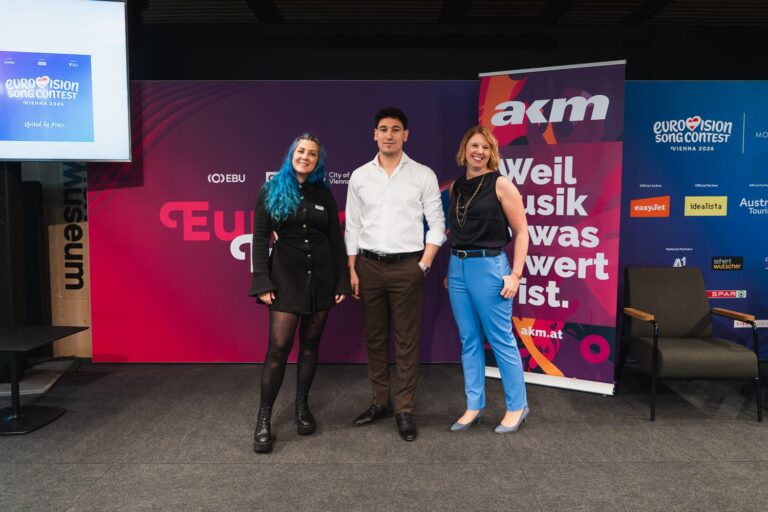
During this year’s Eurovision Song Contest 2026 in Vienna, nowon AG had the opportunity to present its live music recognition technology at the Eurofan House in the Wien Museum together with AKM. The event brought together songwriting, music rights management and technological innovation in one shared discussion about the future of music usage reporting.
Together with AKM, the University of Leeds and Middlesex University London, the program highlighted current insights from the Eurovision Songwriters Survey and opened an important conversation around recognition, visibility and fair treatment of songwriters in the ESC context. The discussion also included international songwriters and creators, including singer-songwriter and AKM member Ella Stern, co-author of the Austrian Eurovision entry “Tanzschein”.
Recognizing music beyond the studio recording
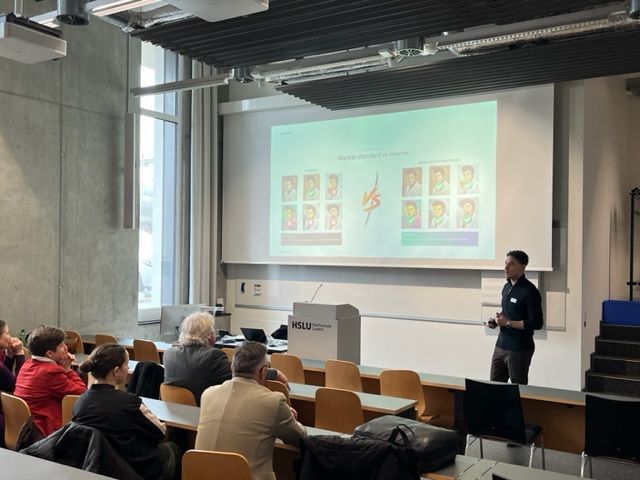
As part of the program, Susanne Grainer, Head of Live Performances at AKM, and Yanik Di Roma, CEO and Co-Founder of nowon AG, presented how automated music recognition can support collecting societies in the live sector. The focus was on one of the key challenges in modern music rights management: identifying music when it no longer sounds exactly like the studio recording.
Live performances, covers, remixes, tempo changes, crowd noise and challenging recording conditions all make music identification significantly more complex. At the same time, AI-generated music introduces new questions around inspiration, attribution and the use of protected works. Traditional recognition approaches often struggle in these environments because live music is dynamic, imperfect and constantly changing.
This is exactly where nowon comes in.
nowon’s technology is built to understand musical identity across versions and real-world conditions. Instead of relying only on exact matches, the system is designed to recognize musical works even when they are performed, interpreted or recorded differently. This helps collecting societies move from manual reporting towards faster, more accurate and more scalable music usage data.
From discussion to live demonstration
As part of the Eurovision Song Contest program, nowon and AKM also monitored a live performance by Austrian artist and producer PAENDA at the Euro Club. The performance was successfully analyzed with nowon’s live music recognition system, including automated setlist creation shortly after the show. This demonstrated how easily the solution can be used in practice and how much time and manual effort can be saved in live music reporting workflows.
A big thank you to AKM, Susanne Grainer, PAENDA and everyone involved for the inspiring exchange and the opportunity to demonstrate what the future of live music reporting can look like.